Browse by topic: All · Fraud and abuse compliance · Investigations · Medicare and Medicaid · Information blocking · Whistleblowers · Other topics
compliance
- Investigations
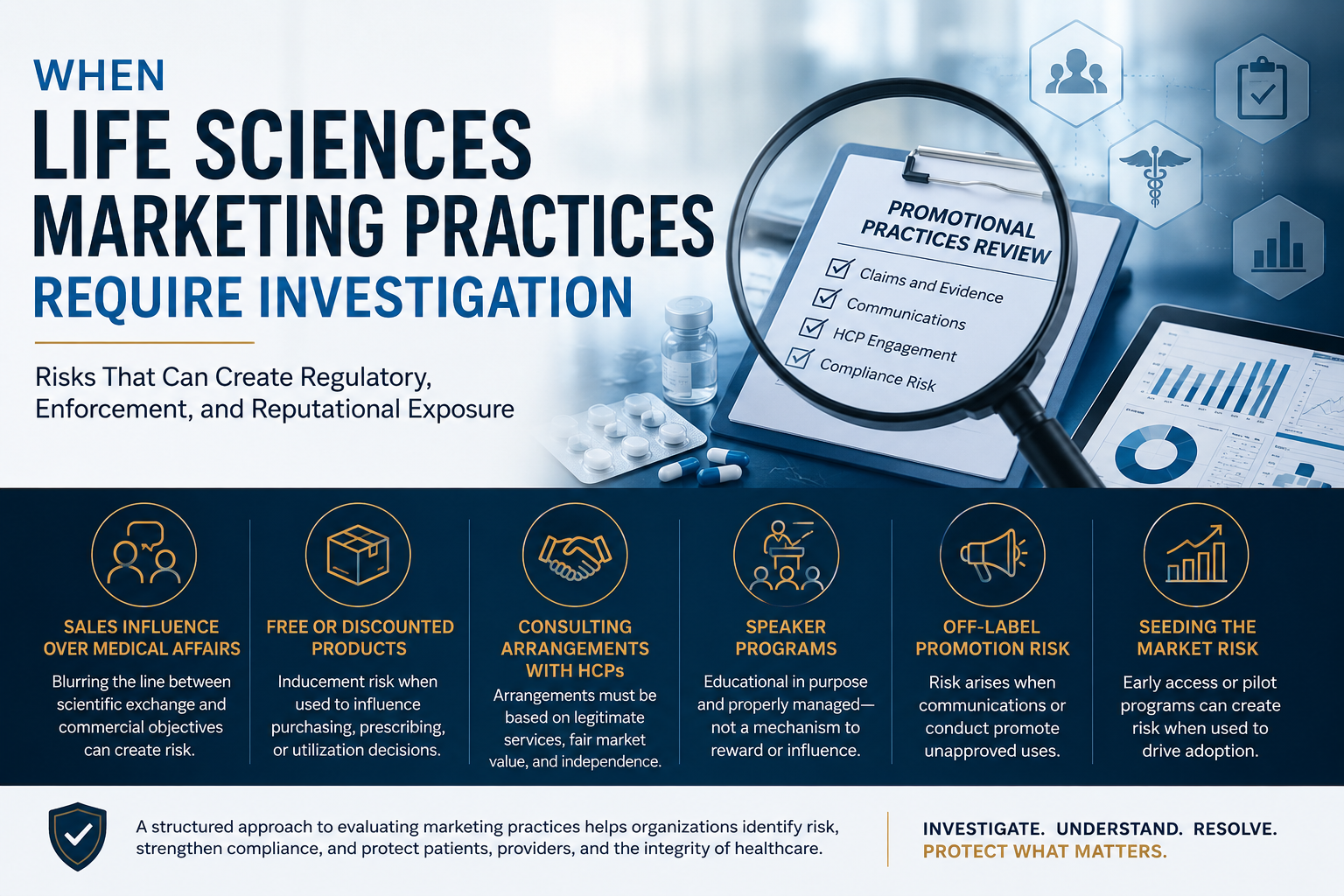
When Life Sciences Marketing Practices Require Investigation: Off-Label Promotion, HCP Arrangements, and Anti-Kickback Risk
Most promotional issues do not begin as obvious compliance failures. They often surface through a sales deck, a field communication, a speaker program, a consulting arrangement, a discounting strategy, or questions about how medical affairs is interacting with healthcare professionals. At the outset, the issue may appear to be a routine marketing or training concern. Over time, however, the surrounding facts can change the analysis.
- Investigations
When Financial Relationships Require Investigation: Stark Law and Anti-Kickback Risks in Healthcare
Financial relationships in healthcare operate under a level of regulatory scrutiny that few other industries encounter. Compensation arrangements, consulting agreements, medical directorships, and referral-related relationships routinely involve overlapping operational, business, and legal considerations.
- Investigations
What Regulators Expect from Internal Investigations in Healthcare and Life Sciences
Organizations conducting internal investigations are often focused on a straightforward objective. They want to understand what happened and determine how to respond. Regulators, however, approach the same situation differently. Their focus is not limited to the outcome. They evaluate how the investigation was conducted, how conclusions were reached, and whether the process reflects a credible and disciplined effort to identify the truth.
- Investigations
When Culture Silences Concerns: Lessons from the Columbia University/ New York-Presbyterian Hospital Report
The Columbia / New York-Presbyterian Hospital investigation illustrates how organizational culture can shape whether warning signs are surfaced or suppressed. Healthcare organizations operate in complex and highly regulated environments. Ensuring that employees feel empowered to raise concerns—and that those concerns are taken seriously—is one of the most effective ways to identify risks early and prevent harm before it occurs.
- Whistleblowers
DOJ’s Emerging Whistleblower Program: How It Works and What It Means for Corporate Compliance
The Department of Justice (DOJ) has signaled and begun rolling out a whistleblower rewards framework aimed at incentivizing insiders and third parties to report corporate crime directly to prosecutors. While the program will continue to evolve through policy and rulemaking, its contours already create immediate implications for New York–based and U.S.-operating companies