Browse by topic: All · Fraud and abuse compliance · Investigations · Medicare and Medicaid · Information blocking · Whistleblowers · Other topics
Compliance
- Investigations
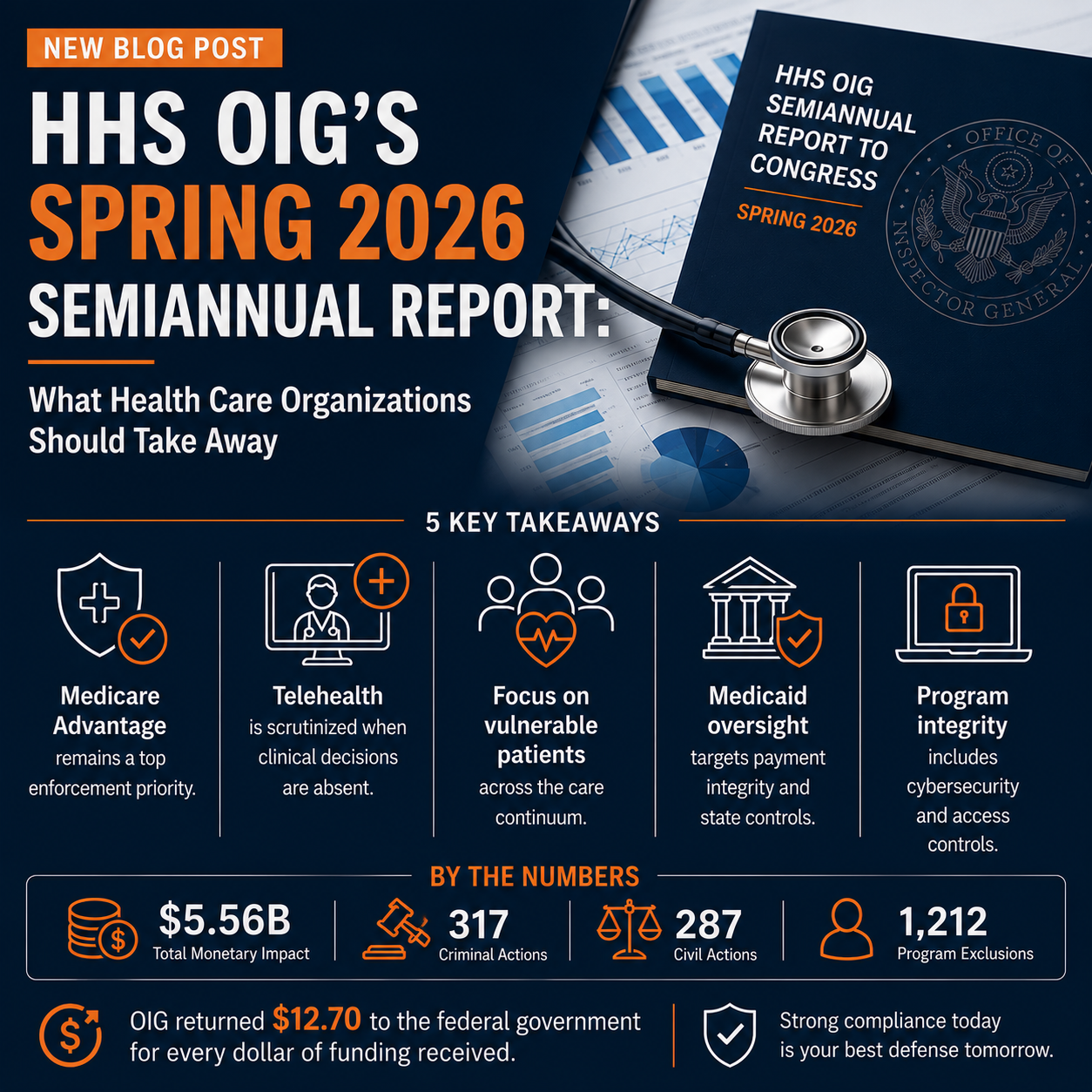
HHS OIG’s Spring 2026 Semiannual Report: What Health Care Organizations Should Take Away
For the six-month reporting period ending on March 31, 2026, OIG reported $5.56 billion in total monetary impact, including $4.3 billion in investigative receivables, $814.1 million in audit and evaluation receivables, and $447.6 million in identified potential cost savings. OIG also reported 317 criminal actions, 287 civil actions, and 1,212 program exclusions. The agency stated that it returned $12.70 to the federal government for every dollar of funding received.
- Investigations
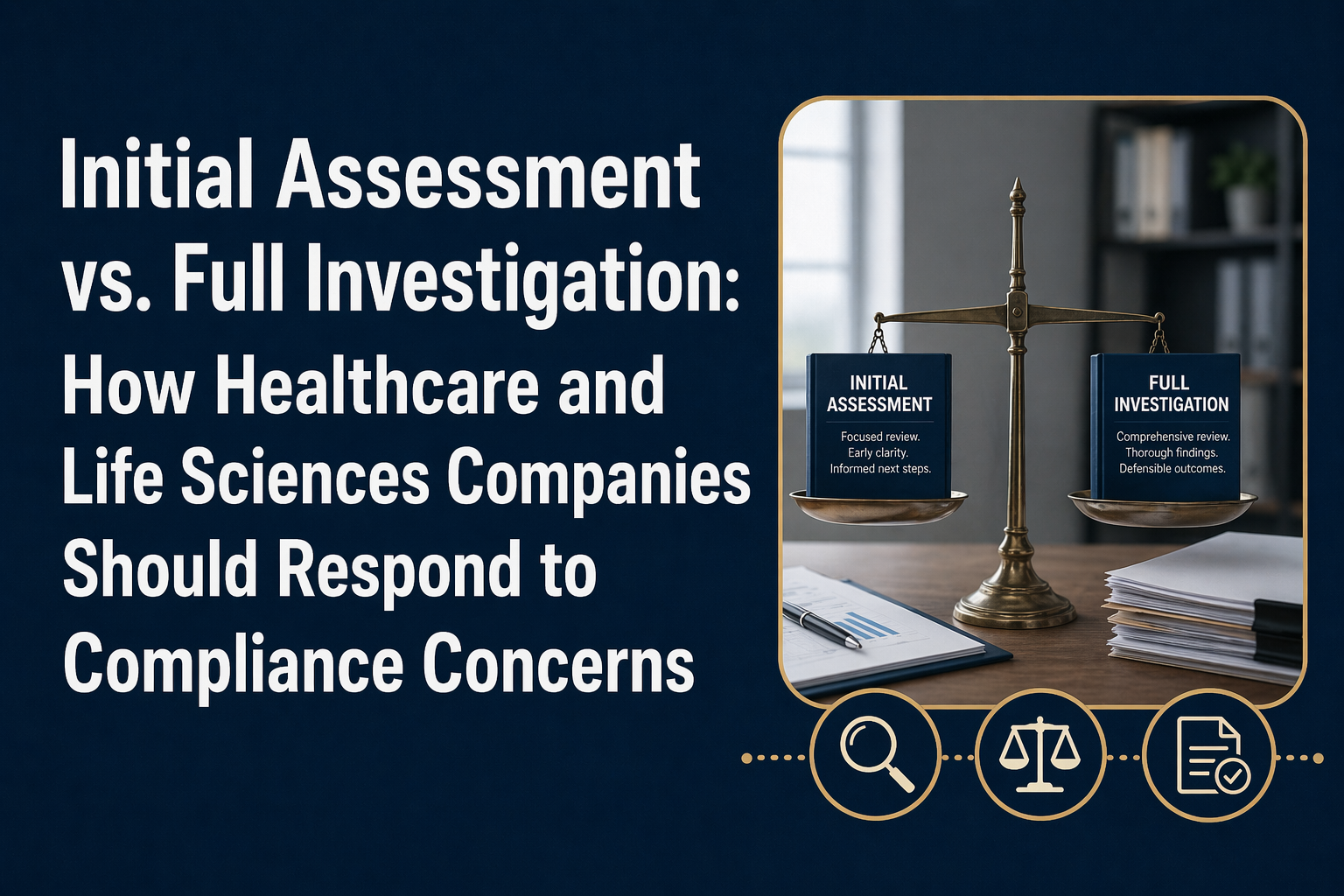
Initial Assessment vs. Full Investigation: How to Respond to Compliance Concerns
When a compliance concern surfaces, the immediate question is usually straightforward: what do we do next? What is less clear is how much to do. Some organizations move quickly into a full investigation, while others take a more informal approach and wait to see how the issue develops. Both approaches can create problems.
- Investigations
Common Mistakes Healthcare and Life Sciences Companies Make During Internal Investigations
When a concern surfaces, organizations are often balancing competing priorities. They want to understand what happened, minimize disruption, and avoid escalating the issue unnecessarily. Those instincts are reasonable. But they can also lead to decisions that make the situation more difficult to manage over time.
- Medicare and Medicaid
When a Billing Question Becomes a Legal Problem: What Healthcare Entities Need to Know
At the outset, it is often unclear whether a billing issue reflects a routine operational problem or something that requires closer scrutiny. That distinction is not always obvious, but it has significant implications for how the issue should be handled.
- Investigations
Internal vs. Independent Investigations: When Should Healthcare and Life Sciences Companies Bring in Outside Counsel?
Internal investigations serve an important role and are often the right starting point. But they require judgment about when that approach is no longer sufficient. That determination turns less on capability and more on structure, credibility, and how the investigation will be evaluated outside the organization.
- Whistleblowers
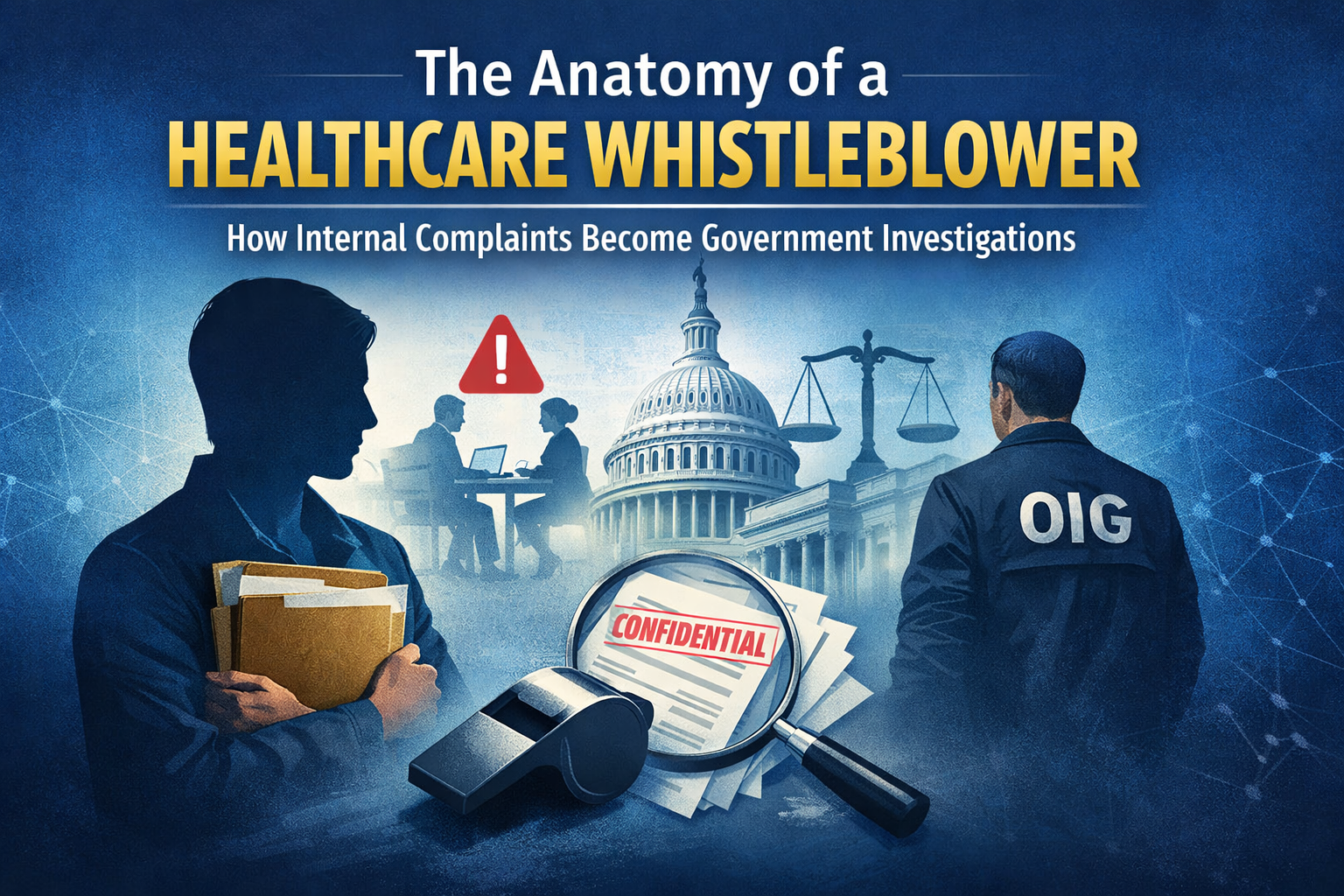
The Anatomy of a Healthcare Whistleblower: How Internal Complaints Become Government Investigations
Most healthcare and life sciences companies do not set out to create whistleblowers. Yet many do, often without realizing it. What begins as an internal concern can evolve into something much larger if it is not handled carefully. A question about billing, a concern about a physician relationship, or an issue raised through a compliance channel may seem manageable at first. But once that concern leaves the organization, it can take on a very different character