What Happens in the Pre-Litigation Stage of Disputes?

Before any lawsuit is filed, there's a phase known as pre-litigation. This stage is often overlooked but plays a critical role in shaping the direction and outcome of a dispute. It involves investigation, strategy planning, and negotiation—all with the goal of either resolving the issue without court involvement or preparing for a strong legal case if necessary.
Key Activities in the Pre-Litigation Stage
Investigation
The first step in pre-litigation is understanding the facts. Parties gather documents, review communications, and collect other forms of evidence. This phase can involve interviews, audits, or expert consultations to piece together a clear picture of the dispute.
Legal Evaluation
Attorneys evaluate whether the facts support a legal claim or defense. They consider the relevant laws, potential causes of action, available remedies, and any procedural bars such as statutes of limitations. At this stage, lawyers might also assess the jurisdiction and venue that would be most favorable.
Demand Letters
A formal demand letter may be sent to the opposing party outlining the claims, evidence, and a request for action—typically payment or the cessation of a particular behavior. Demand letters are not just formalities; they can initiate negotiations or serve as evidence of good faith if the dispute reaches court.
Early Negotiation
Before litigation begins, parties often try to settle the matter through negotiation. This may involve informal discussions between parties or through legal counsel. In some cases, mediation is suggested or required. Reaching a settlement early can save time, reduce costs, and preserve business relationships.
Why Pre-Litigation Matters
A well-executed pre-litigation process allows both parties to understand the risks and benefits of moving forward. It may avoid unnecessary litigation entirely or prepare the groundwork for a more strategic, focused lawsuit.
Recent Posts
What Are My Settlement Options—And When Should I Consider Them?
When a legal dispute arises, heading to court might feel like the obvious move—but it’s not the only one. Many disputes can be resolved more efficiently, cost-effectively, and privately through settlement. But understanding how settlement works, what options are available, and when to consider them is key to making a smart decision.
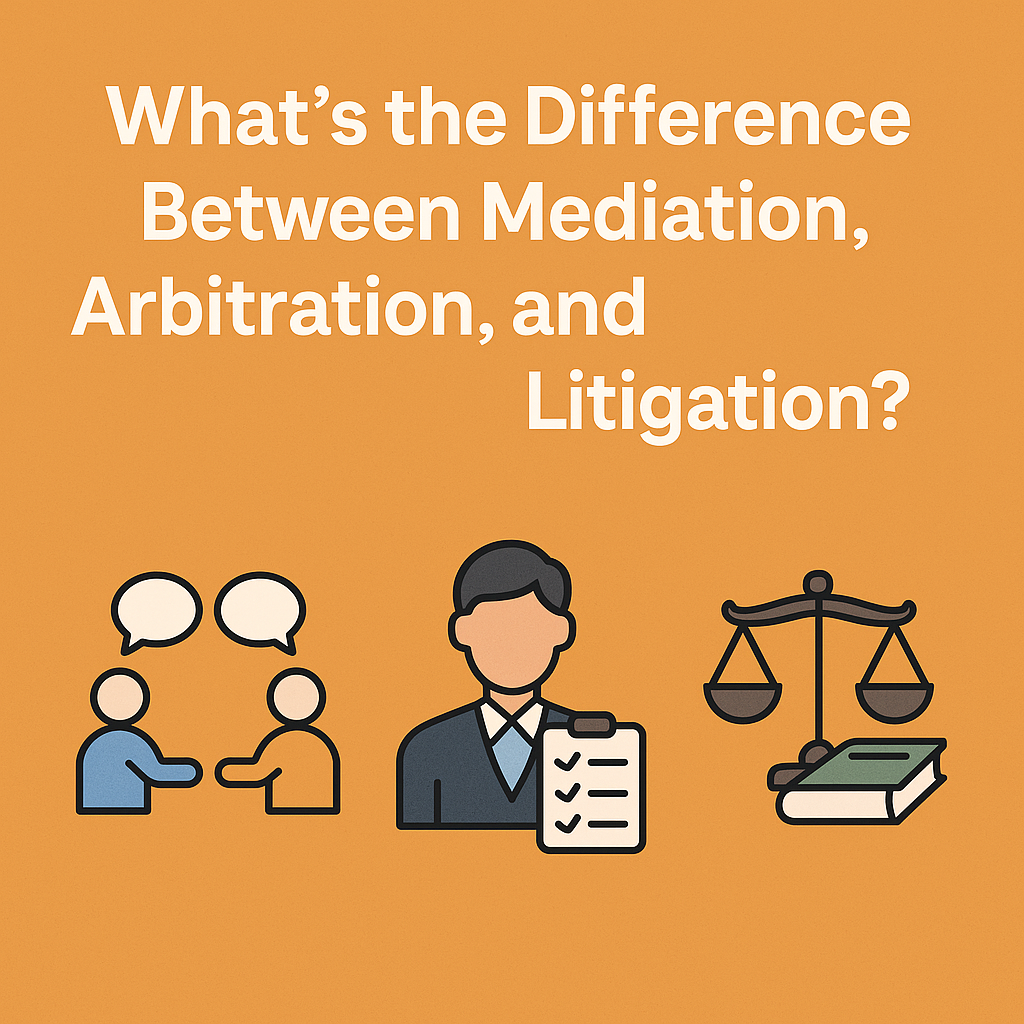
What’s the Difference Between Mediation, Arbitration, and Litigation?
When a legal dispute comes up, figuring out how to handle it can feel overwhelming. There’s no one-size-fits-all answer—but understanding your options is a great place to start. The three most common ways to resolve a dispute are mediation, arbitration, and litigation. Each has its own approach, benefits, and trade-offs. Here’s a breakdown of what each process looks like—and how to know which might be right for your situation.